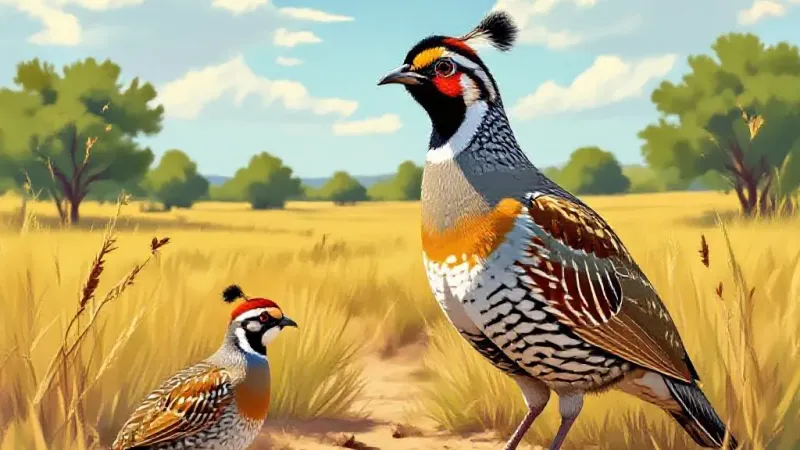
The 2026 quail hunting season in Texas officially opened on November 1, with statewide prospects varying significantly across different regions, according to the Texas Parks and Wildlife Department (TPWD). While some areas of South Texas and the Trans Pecos are anticipated to offer good bobwhite quail hunting, overall bobwhite populations are expected to be a "mixed bag," with no region's forecast described as "great." In contrast, scaled or blue quail numbers show notable increases in the state’s western areas.
TPWD biologists completed their annual roadside quail surveys in early August, covering more than 3,300 miles. Patrick Schutz, the TPWD’s Upland Game Bird Program leader, reported that "Overall, the numbers were once again in good shape in this year’s surveys." He added that the department anticipates a good season for hunters, particularly in the South Texas and Trans Pecos regions, where populations have historically been robust.
Early rains across most of the state provided favorable range conditions and supported an initial hatch of bobwhite quail chicks. However, these conditions deteriorated over the summer with a return to hot and dry weather in many ecoregions. This change likely impacted chick survival and limited hens' ability to produce additional nests throughout the summer months. Schutz acknowledged that TPWD biologists expected bobwhite populations to be affected by the summer heat and dryness, but expressed satisfaction with the statewide survey results.
Regional bobwhite quail counts showed diverse trends. The Rolling Plains recorded the highest count at 13.68 birds per route, although this represented a decrease from 15.32 in 2025. South Texas also saw a decline to 10.17 birds per route from 12.7 the previous year. Conversely, the Gulf Prairies experienced an increase, reaching 7.5 birds per route, up from 4.4. The High Plains also showed an improvement, with counts rising to 6.56 from 4.44.
While the season officially commenced on November 1, quail hunters typically find that the most productive hunting opportunities begin later in December. This is when the weather turns consistently crisp, making it easier for hunting dogs and hunters to locate coveys. The daily bag limit for quail is set at 15 birds, with a possession limit of 45. The season is scheduled to conclude on February 28.
In a more positive trend, scaled quail populations demonstrated significant growth in several regions. Schutz indicated that these drought-tolerant birds "have taken full advantage of the quality habitat conditions and rainfall out west." The Edwards Plateau experienced a substantial surge, with scaled quail numbers more than doubling from 14 in 2025 to 29.88 this year, a figure almost four times its long-term average. The Trans Pecos region also saw an increase, with counts rising from 20.06 to 23.18, both considerably better than the long-term average of 17.84.
However, scaled quail counts were lower compared to 2025 in the High Plains, Rolling Plains, and South Texas. Despite being below five birds, the High Plains result of 4.75 was still better than its long-term average of 2.38.
The decline in quail hunting across Texas, and indeed much of the Southeast, highlights a broader issue of fluctuating populations often tied to rainfall and habitat quality. Public records indicate that reversing this trend will require a concerted effort to improve habitat and manage for these birds, similar to conservation efforts for white-tailed deer. Hunters seeking access to public land can do so through the Texas Public Hunting Lands program by acquiring a $48 Annual Public Hunting Permit.
As the season progresses, hunters are encouraged to monitor local conditions, particularly as late December approaches, to make the most of the varied opportunities across the state.